
I was setting the table for dinner when my mother called out from the kitchen, “Schwarzer Tee? Oder Pfefferminz?” (Black Tea? or Peppermint?) A variation of a question asked in our house every night for as long as I can remember. Tea has always been the drink of choice at dinner in our German home. Not milk, water, or soda, TEA. After dinner, my mother would brew another pot of tea as we settled into our evening routines of TV or reading. Chamomile, Hagebutte (Rose Hip), Fruit teas… The “tea cabinet” was always full of choices: a tea for every season, a tea for any ailment, teas that just tasted good. So, when the people at Ronnefeldt asked if I would try their specialty teas, I couldn’t say yes fast enough.
Germans drink tea. How much? According to the Deutsche Teeverband (German Tea Association) 2026 Tea Report, people in Germany drink 66.1 liters of tea per capita each year. That’s 46 BILLION cups of tea in one YEAR.
(And, because I know some of you will ask, beer consumption per capita in 2025 was 72.193 liters and falling.)
Order Ronnefeldt Tea and get a 15% discount with my special code GERMANGIRL15
This post contains affiliate links, which means I earn a percentage from sales at no cost to you.
You can drink tea any time of day, and there is a tea for every situation.
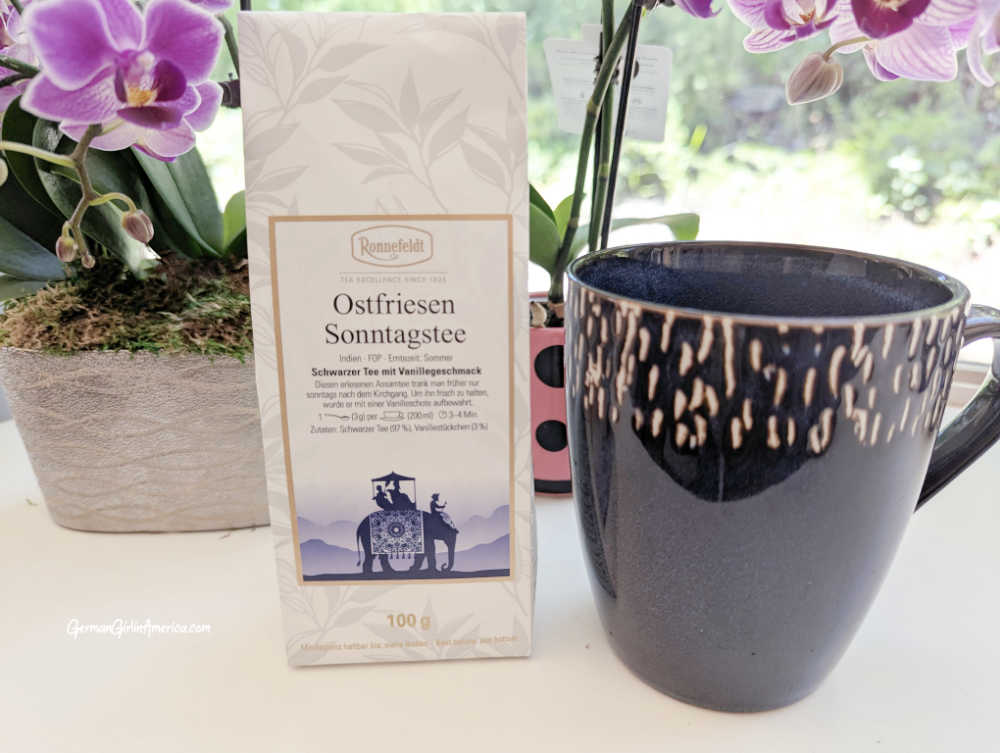
Want to wake up? A nice strong Ostfriesen Tee will get your heart pumping.
Want to relax? Chamomile soothes your nerves and helps you sleep.
Want to stop tummy trouble? Peppermint tea supports digestion and makes a cool, refreshing summertime drink.
Want to calm a baby? Nothing works like fennel tea to calm a baby’s upset tummy.
And the list goes on… Many Germans will reach for teas instead of pills to handle everyday ailments. It’s not unusual for a doctor to prescribe a tea from the Apotheke instead of standard Western medicine.
Ronnefeldt Teas
And then the box from Ronnefeldt arrived.
For 200 years, Ronnefeldt has provided the highest quality teas to hotels and restaurants. If you’ve enjoyed a cup of tea in a nice restaurant or cafe in Germany, chances are, you’ve been lucky enough to enjoy Ronnefeldt tea. (I know that I have while visiting my Tante in Bad Homburg).
Johann Tobias Ronnefeldt established the company in Frankfurt, and it was passed down for generations to family members who focused on quality. One branch of the family even lived in Shanghai to oversee product exports. Growers must meet the highest standards to earn the Ronnefeldt name.
More recently, Ronnefeldt expanded to online sales in the United States, which is good news for all of us!
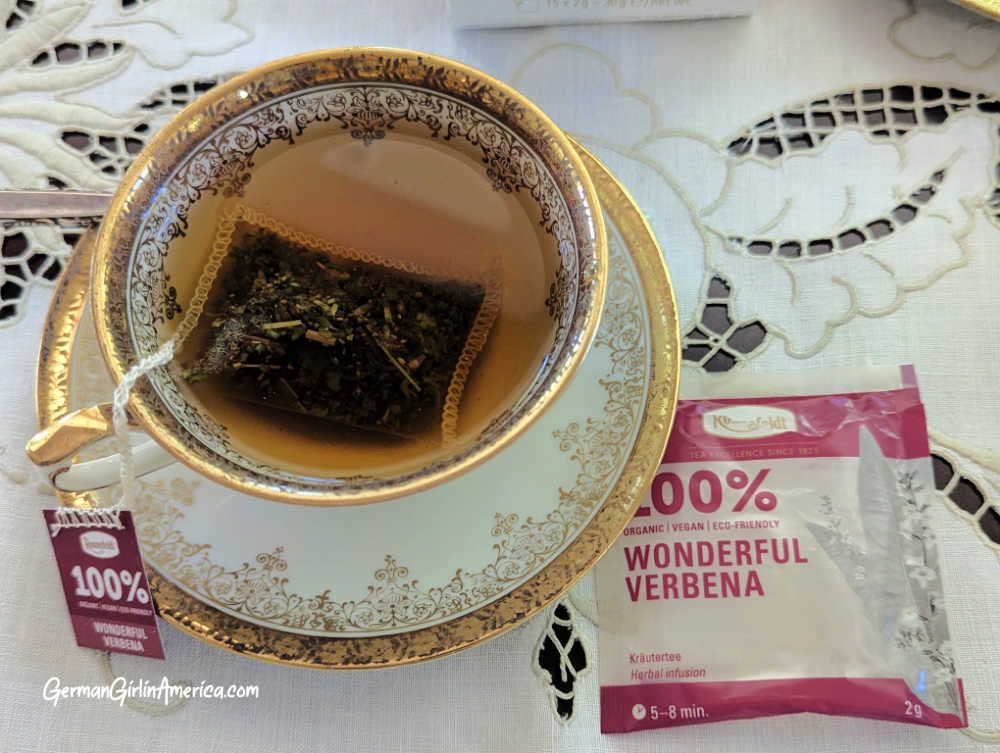
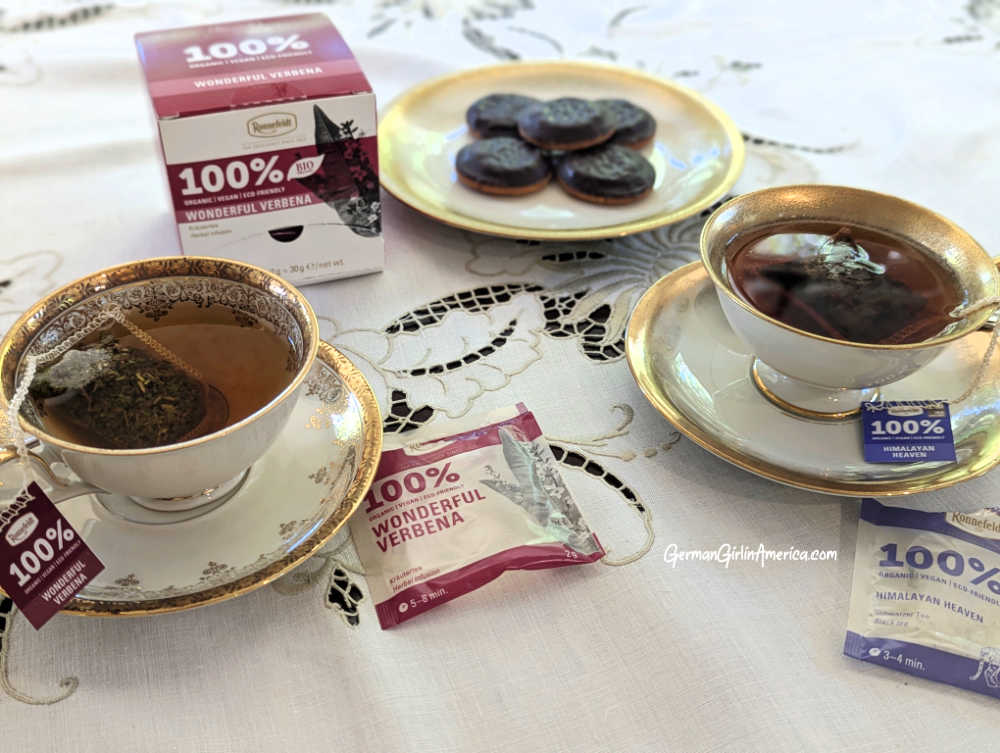
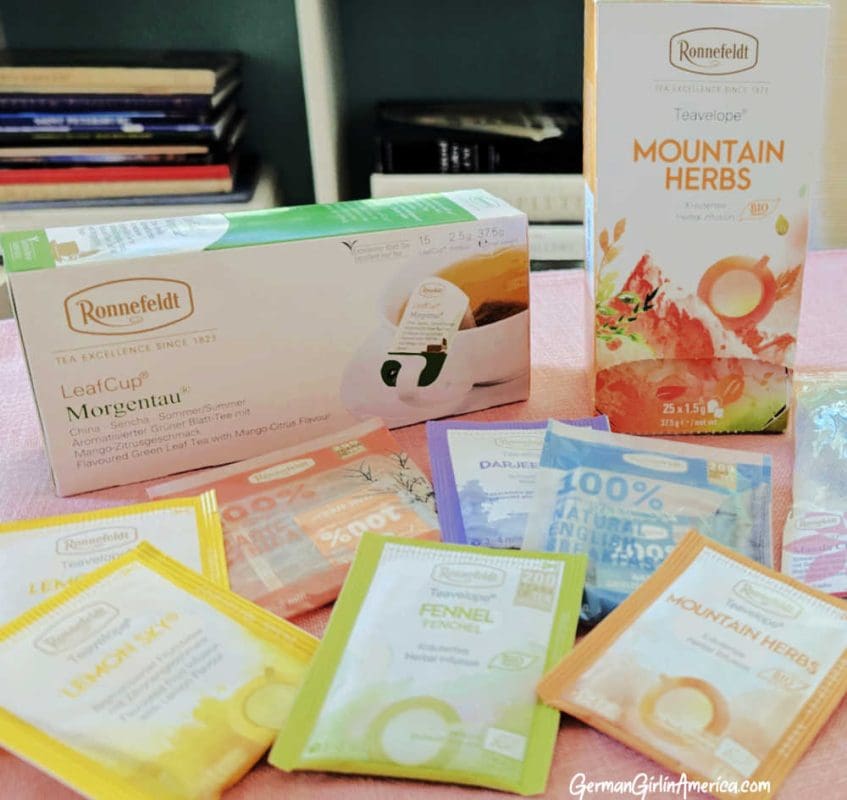
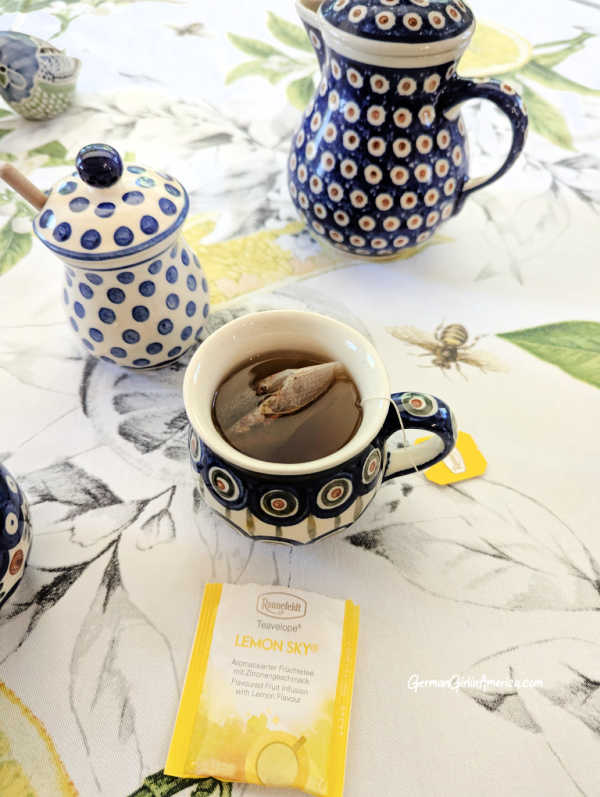
My parents and I brewed cup after cup of tea. Rose Hip, Fruit, Lemon Sky, Verbena, and Himalayan Heaven. We tasted Bergkräuter and Morgentau, Jasmine and Vanilla. After tasting all the delicious Ronnefeldt tea, my mother declared she had a new supplier: Ronnefeldt.
Order Ronnefeldt Tea with my Special Discount Code for a 15% Discount
Reader Discount Code: GERMANGIRL15
LeafCup® – Rosy Rose Hip BioRonnefeldt TeaClassic Loose Leaf – Sunday Tea (Ostfriesen Sonntagstee)Ronnefeldt TeaTeavelope® – Mountain Herbs BioRonnefeldt TeaTeavelope® – Lemon Sky®Ronnefeldt Tea


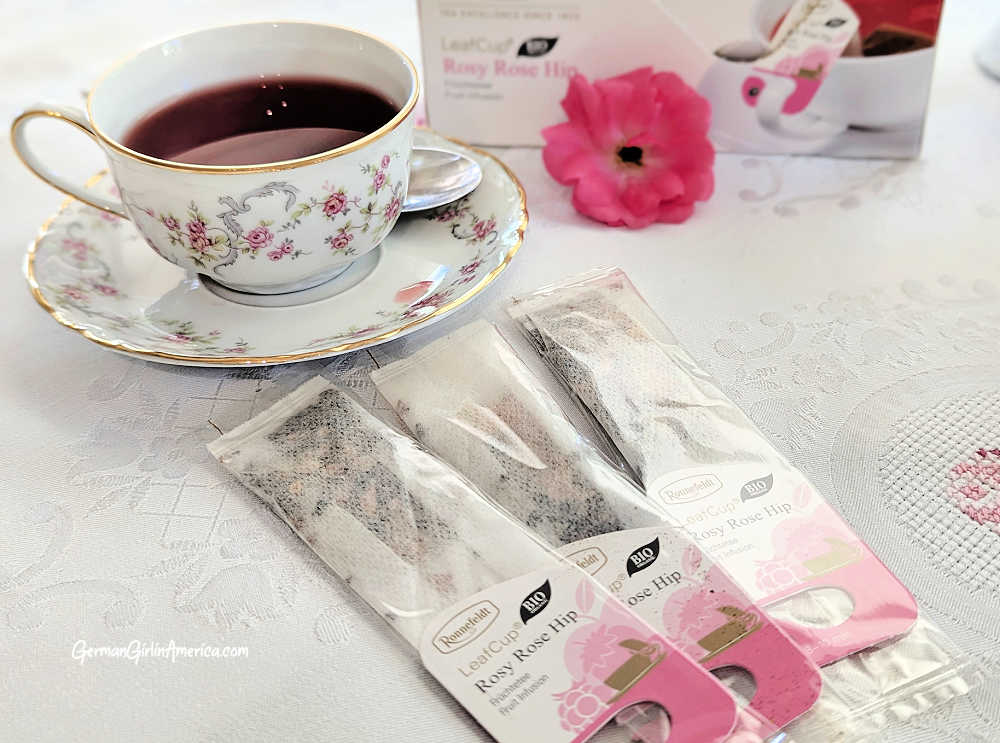
The tart Rosy Rose Hip matched my father’s memories. We all agreed we had never tasted better. The flavor of Strawberry Garden reminded me of summertime in a cup, and Mountain Herb was exactly the flavor my mother wanted for her evening tea. Every tea we tried tasted as it should. The flavors were distinct, and strong or subtle, depending on the type of tea.
But it wasn’t just the flavor.
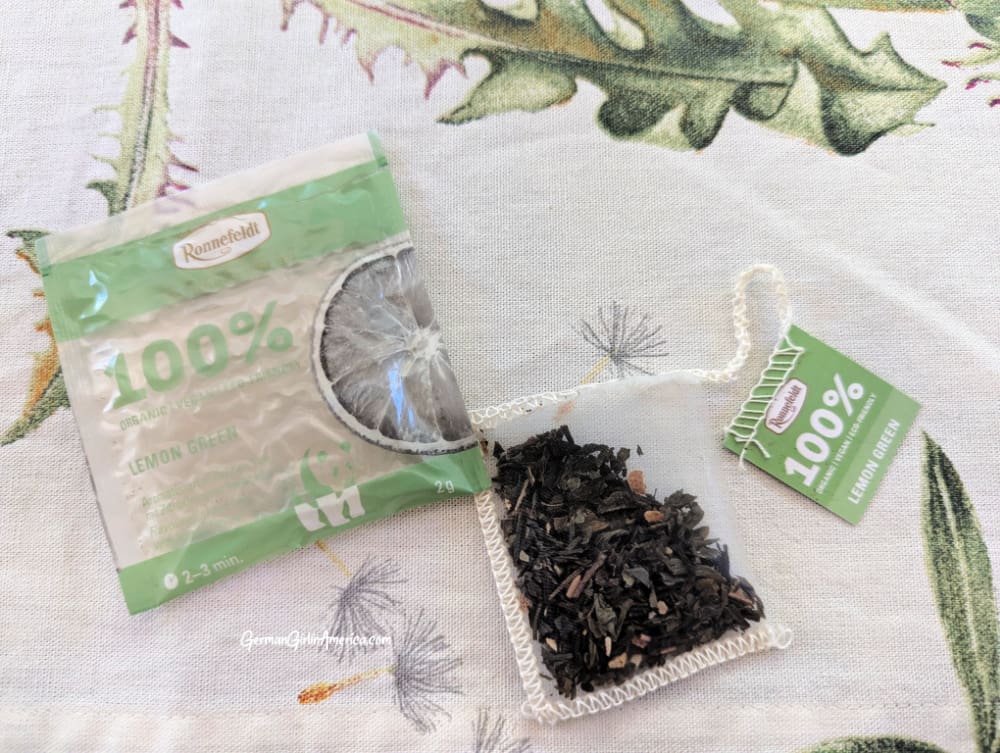
The quality of the packaging, sewn fabric bags, reminded us that the tea wasn’t just “leaves in a soggy baggie”. And I love the ingenious bag with a hook for the cup handle.
Order Ronnefeldt Tea with my Special Discount Code for a 15% Discount
Reader Discount Code: GERMANGIRL15
Tee and Kräutertee
My mother remembers her Oma gathering herbs and drying fruit for tea. My father still remembers the thorns he encountered while gathering rosehips. (To this day, he still loves Hagebutte Tee, but from the safety of a tea bag!) In post-war Germany, Kräuter Tee (herb tea) was free to pick and safe, because the water had to be boiled.
Once my parents moved to America, the longing for those flavors remained. Boxes of herbal and medicinal tea found space in the brown paper-wrapped packages my Opa sent at Christmas and Birthdays. And the lightweight tea filled our suitcases when we returned from visiting Germany. The flavors of German tea were as much a part of my childhood as chocolate and Rotkohl. It’s just always been a part of our lives.
To clarify, tea is made from black or green tea leaves. Kräutertee, or herbal tea, and Fruchtee, fruit “tea”, are actually infusions made from dried herbs, bark, roots, seeds, flowers, or fruits.
People have been drinking these herb and water infusions for years. For health, to slake thirst, and because they taste good.
Black tea and green tea have a more recent and important role in Germany’s history.
Germany’s Tea History
The Dutch East India Company introduced tea to Germany in 1610, and by the early 1700s, the East Frisians adopted this hot beverage to counteract the cold, damp climate. Friedrich the Great wasn’t thrilled about the money leaving the country for tea imports, so in 1751 he created his own import company to get in on the Asian trade market: “The Königlich Preußische Asiatische Compagnie in Emden,” or the Emden company. It had four ships that imported tea from Canton, China, and the company did reasonably well supplying Germans with tea until the 7 Years’ War. The company folded. Friedrich banned imports and tried to invent substitutes out of lemon balm and parsley (which sounds more like soup than tea). Not too surprisingly, they failed. The East Frisians rebelled and became tea smugglers. Friedrich threw up his hands and removed the ban. Germans had developed a taste for tea.
In fact, the East Frisians’ love for tea is so strong and ingrained in their society that, in 2016, their East Frisian Tea ceremony, complete with Kluntje (sugar lumps), gained UNESCO Cultural Heritage Status.
Sadly, Germany doesn’t have the climate for growing black or green tea. Not for lack of trying! In 1884, a company tried to establish a tea plantation in Bavaria. It didn’t last long.
What Germany does have is the perfect climate for growing herbs and fruits for Kräutertee (herbal tea). And so, people got into the habit of making tea.
But with urbanization and industrialization, not everyone had time to collect, dry, and mix their own herbal combinations. They began to buy their tea. Tea houses sprang up alongside coffee houses, and people enjoyed afternoon tea with a slice of cake. (Tee Klatsch doesn’t ring as well in the ear as the alliterative Kaffee Klatsch, but it happens just as often.)
During World War I, “tea bombs”, hand-sewn gauze bags filled with tea leaves, were supplied to soldiers as part of their rations. Civilians came to enjoy the ease of the tea bag, and by 1929, Rudolf Rambold automated the tea bag process with his Pompador machine. It could make a staggering 35 tea bags in 1 minute! Later, “Teefix” sped up the process even more, creating a “double bag” from parchment.
Tea in Germany Today
Tea’s popularity in Germany keeps rising every year. In no small part because of increased research into tea’s health benefits. But mostly, because tea tastes good.
In 2024, Germany was the world’s 9th-largest tea importer and ranked 8th in tea exports, selling $219M in tea! (I’m unsure if that number includes what my mother carried over in her suitcase on her last visit.)
Order Ronnefeldt Tea with my Special Discount Code for a 15% Discount
Reader Discount Code: GERMANGIRL15
Order Ronnefeldt Tea
Thankfully, Ronnefeldt Tea is now available in the United States through their website. You can find a selection of teas to fill your cabinet here-
Use Code : GERMANGIRL15 for a 15% discount
LeafCup® – Rosy Rose Hip BioRonnefeldt TeaLeafCup® – Morgentau®Ronnefeldt TeaEco 100% Line – Fruits of JoyRonnefeldt TeaEco 100% Line – Himalayan HeavenRonnefeldt TeaTeavelope® – ChamomileRonnefeldt TeaLeafCup® – Bergkräuter Herbs Swiss Style BioRonnefeldt Tea


