
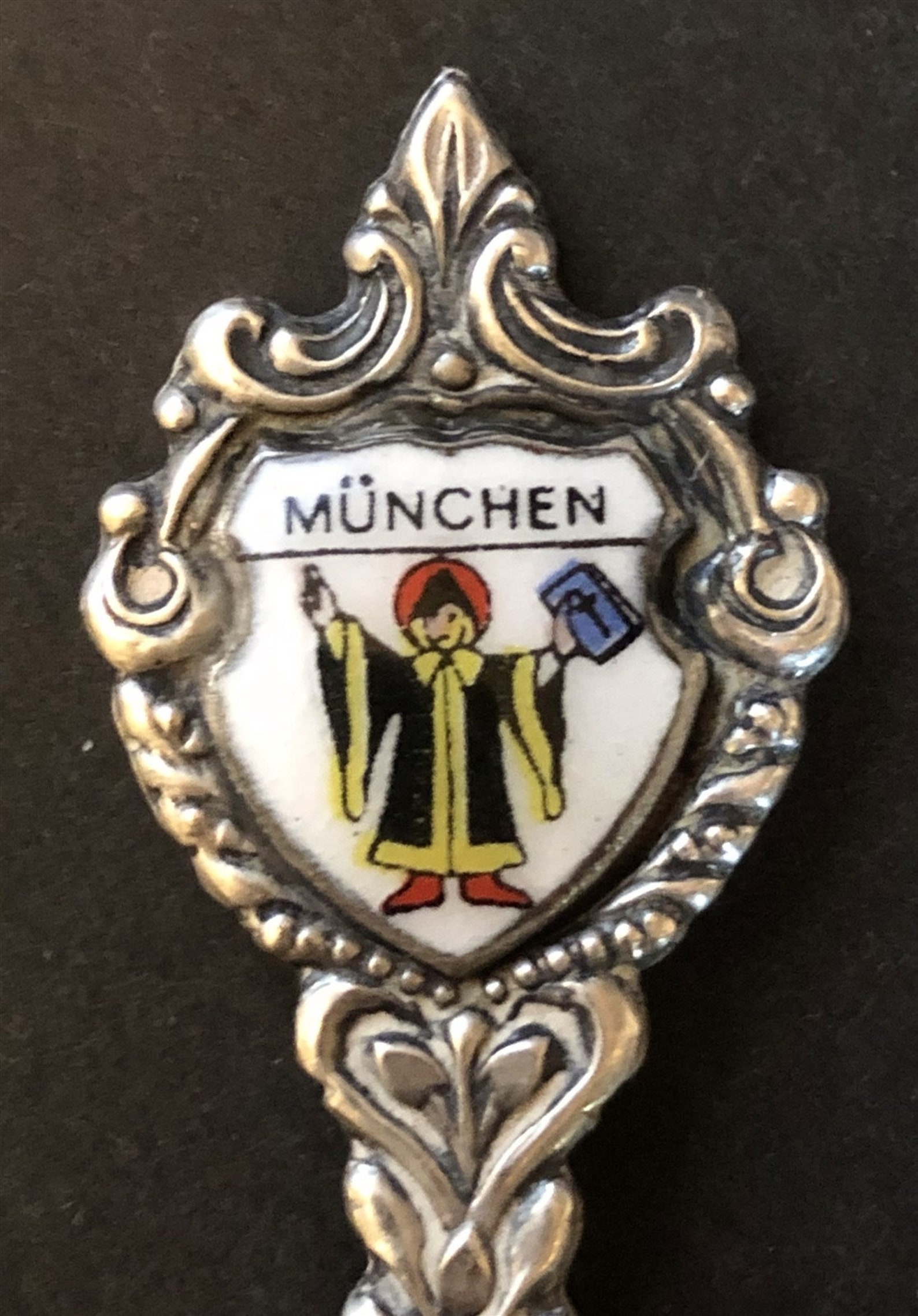
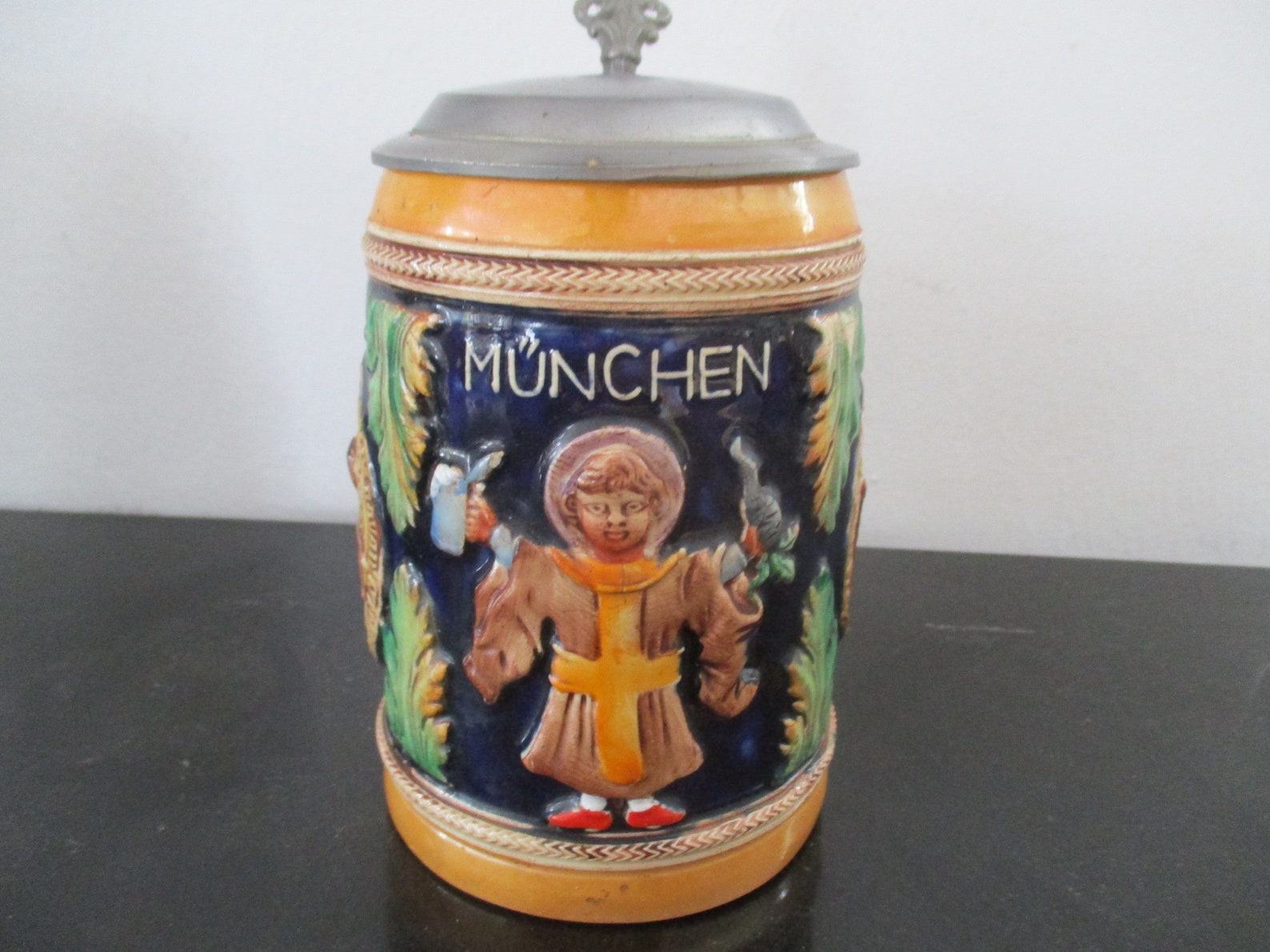
For someone not from Munich (like me), the Münchener Kindl can be a bit confusing. When I first heard it, I presumed it referred to a native, someone born in Munich. And although I’ve heard people refer to themselves that way, it’s much more than that. It’s a symbol of Munich, and you can see it everywhere in the city. A monk with outstretched arms, holding a book in one hand and extending fingers in blessing with the other. So how did this symbol, this figure, become known as the Münchener Kindl? What is the Muenchener Kindl? Why is it sometimes a chubby guy in robes and other times a child or even a young woman leading the Oktoberfest parade? The Münchener Kindl has a long, fascinating history on the coat of arms, and today it remains a figure of pride for the city. The expression “Münchener Kindl” dates back only a few hundred years, but the symbol has its roots in the very origins of the city.
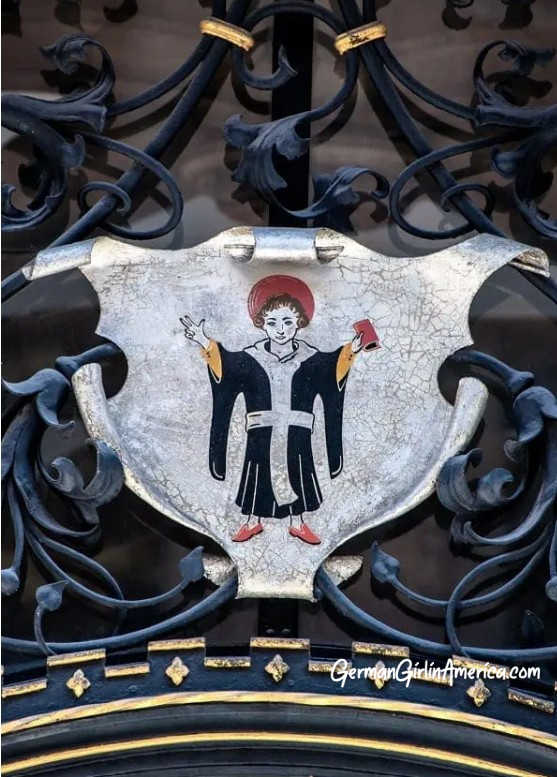
What is the Muenchener Kindl?
The city of Munich (München in German) began as a stop on the Salzstraße (Salt Road) at the Benedictine Monastery by the toll bridge over the Isar River. Monks (Mönch in German) gave the city its name, München, and its symbol. On the city’s coat of arms, a monk stands with outstretched arms; in one hand is a law or code book, and the other holds out fingers as if to give a blessing.
Over time, that symbol changed.
Around the 15th century, artists began reimagining the monk’s image. Unofficial depictions of the Monk started showing up. Then, in the 16th century, a sort of “Munich Mania” swept through the city, and suddenly, a version of the symbol was EVERYWHERE. What began as a stern monk on the Coat of arms in 1239 changed radically. You would see a chubby monk holding a beer or a radish. Maybe a monk looking childish while sitting on a beer keg. Then, the image changed to a boy in a monk’s robes and finally to a gender-neutral child with curly hair. (Similar to the Christkind or Christ Child).
A great example can be seen on the tower of the Neues Rathaus in the Marienplatz. Sculptor Anton Schmidt topped the tower with the Münchener Kindl to look down over the city. The model, his 9-year-old son, Ludwig Schmid-Wildy, aka Wiggerl (I really love that nickname; you know the kid couldn’t sit still).

“Wiggerl” the Muenchener Kindl on the New Rathaus Tower
Munich Coat of Arms
Still, the Coat of Arms remained a serious monk until 1808, when King Max Joseph I ascended the throne. He changed the symbol to a Lion holding a shield with an M on it, claiming it was time to end “Monk Barbarism.” This did NOT go over well with Munich citizens, and there were protests. By 1818, he backed down a bit and put the silhouette of a monk’s head on the Lion’s Shield.
Ludwig I (the Oktoberfest King) was passionate about the history of his city and its people. He brought the Monk back to the Coat of Arms, wearing a black robe and holding his book. Right around this time, the citizens began referring to the monk as the Münchener Kindl. Then, in 1865, Ludwig II (the Fairy Tale King) gave the monk red shoes and a red book. And so it remained until World War II. From 1936 to 1945, the coat of arms was modified to incorporate the Nazi Swastika. By 1949, they went back to Ludwig’s Monk.
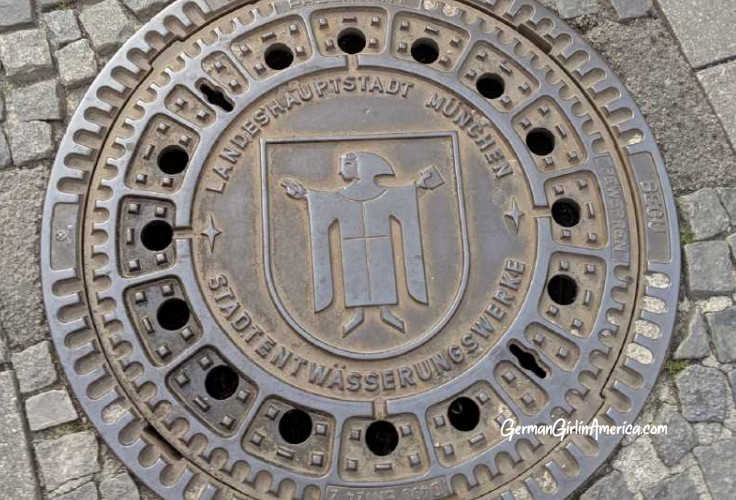
Finally, in 1957, graphic artist Eduard Ege designed the modern Coat of Arms that is seen all over town, from manholes to postcards.
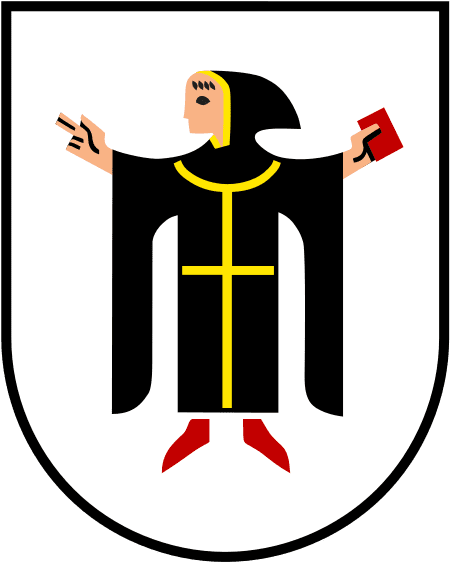
Still, that doesn’t explain how the Münchener Kindl ended up as a girl on a Horse leading the Oktoberfest Parade.
The Münchener Kindl and Oktoberfest
In 1930, the Münchener Kindl came to life when Ellis Kaut, author of the Pumuckl series, became the first Münchener Kindl. (Despite being from Stuttgart!)
Today, the Einzug der Festwirte, or Grand Entry of Oktoberfest Landlords and Breweries, is led by the Münchener Kindl. This version of the Kindl is a young woman in her 20s. She rides a horse, wearing black monk robes with yellow trim, and holds a Steinkrug (presumably, the job is thirsty work!). Her other Oktoberfest duty is leading the Trachten and Schützenumzug. This special parade of Tracht and Gun clubs highlights the cultural history of Munich and the Oktoberfest. Viktoria Ostler held the title, from 2016- 2022, following in the footsteps of her Aunt and great-aunt. Today, Franziska Inselkammer wears the robes.

The job is more than just sitting on a horse. Since 1972, the Münchener Kindl has served as an ambassadorship of sorts for the city, and she even appears at State functions. The girl chosen must have been born in Munich, and her parents and grandparents as well. This isn’t just a beauty contest! She should have good manners, a detailed knowledge of Munich and Bavaria, and good language skills. Generally, the girl chosen is a daughter of an Oktoberfest Tent Landlord or Brewer, and she stays in the job for a few years.
What is a Münchener Kindl? It depends on who you ask!
Some say a monk, some say a child, others say a beautiful woman, but whatever image you choose, the Münchener Kindl is the symbol of the city of Munich!
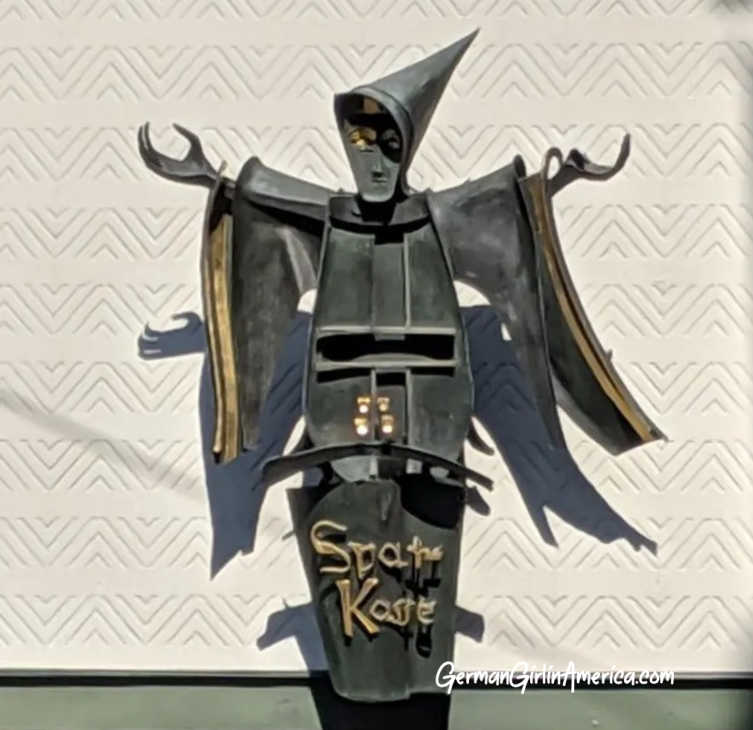
And it’s EVERYWHERE!
Munchen (Munich), Germany with Monk on Silver Plated Souvenir Spoon – pre-owned beermug bavaria


I was born in Munich Germany on July 18 1940
Would you call a person born and raised in Munich a Münchner Kindl?
I think some would consider themselves a Münchner Kindl.
I was born in Munich on August 8th 1943